Our Invite to “Collab”!

“Collab” is one of the most popular words  of post-Millennials, according to  the authors of  Generation Z, Explained: The Art of Living in a Digital Age 

While now it’s collab, I have two decades experience with its ancestor, collaborating, and with teens, or minors – those 17 years and 364 days and under. The rich experiences and major triumphs I attribute to these teen partnerships continually fuel my personal growth and commitment for radical youth infusion. When I reflect on these mutual mentoring experiences, I am reminded how much I still have to learn. The uniqueness of each experience, the singular nature of every youth-adult partnership, make for a varied and exciting pathway toward impactful interGEN interdependence.

My latest collaboration started in 2021 as a conversation and grew into a book, the Youth Infusion Hub and a deep collaboration with a remakable teen –  Denise Webb.

She is one of two dozen teens who work in different capacities with adult-run organizations, and my research at the time sought to gain insights about the good, the bad and the ugly. A few emails and Zooms and Denise and I realized that our bigger philosophies met in a shared vision for our future where teens contribute meaningfully to organizations large and small. We had the opportunity to examine and apply the ins and outs of interGEN collaboration ourselves as we documented ways organizations are collaborating with minors in major ways, and how it can be done in any organization. This project that became Why Aren’t We Doing This! Collaborating with Minors in Major Ways showcases Denise’s insights and her remarkable ability to meet deadlines between classes and a long list of other commitments and responsibilities.  

We hope the stories, quotes and strategies we present will spark every group of people to look around and recognize that without youths, something is missing — irreplaceable insights, intelligence, intuition and the ideas of young generations. 

We provide reasons why, techniques how, and commitments to supporting youth infusion. Nineteen year-old Denise invites everyone to consider opening their mind and inviting teens to be key and critical partners:

“Let us build and revise systems that have torn you, me and the people before us down. Join us. Have us on your team.”

Our book is the starting point. To boost momentum, we created a Hub and provide resources for infosharing. Now more than ever, we need you, regardless of age or position.

We invite you to . . .

  • Tell us what topics from our book you want expanded on or suggest new angles of interGEN collab 
  • Submit a guest blog to wendy@youthinfusion.org 
  • Check out our cadre of interGEN collaborators 
  • Sign up for our biweekly updates with tactical tips and that feature the innovations of others
  • Participate in the Youth Infusion Hub to grow and enrich our interGEN knowledgebase and support the community by sharing your lived experiences and expertise.

Together we can work as a team. When we exchange different approaches to youth infusion, individuals and institutions all benefit!

Courtroom interGEN Camaraderie

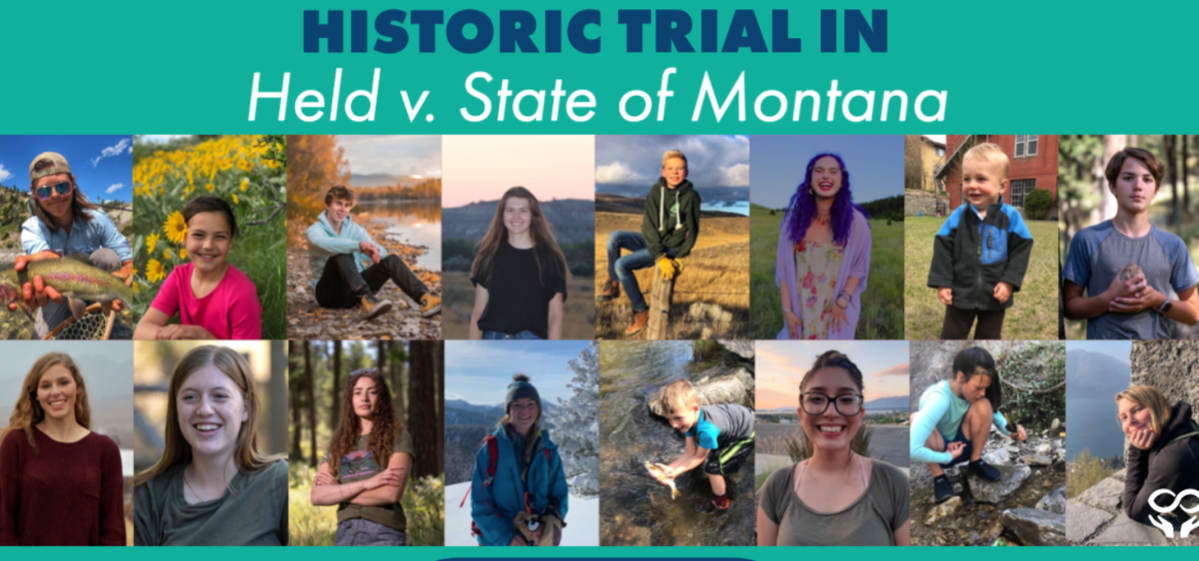
How often does a lawsuit with 16 plaintiffs  between the ages of 5 to 22 get noticed?  News outlets from CNN to the front page of The Washington Post signal the historic nature of a  trial centering on the climate crisis. The ruling prioritizes a child-first orientation and human rights obligation reflecting the Constitution of the State of Montana that “The state and each person shall maintain and improve a clean and healthful environment in Montana for present and future generations”. 

U.S. District Court Judge Kathy Seeley in her 103-page decision found that

“young Montana residents have experienced past and ongoing injuries resulting from the State’s failure to consider [greenhouse gas emissions] and climate change, including injuries to their physical and mental health, homes and property, recreational, spiritual, and aesthetic interests, tribal and cultural traditions, economic security, and happiness.”

If upheld by the Montana Supreme Court, it will reverse a recently passed state law that prohibits state agencies from considering the impact of global warming and pollution during the permit process for fossil fuel projects.

Eva, one of the plaintiffs, says

 “I’m so speechless right now. I’m really just excited and elated and thrilled. I cannot believe the ruling. I’m just so relieved. I feel so grateful to have worked with every single person who has been involved in this. Everybody from Our Children’s Trust is just amazing. They’re all so wonderful. And I have so much love and appreciation for the other youth plaintiffs because they’re just so fantastic and such wonderful people. And we together have done this amazing thing and it’s just so wonderful.”

The camaraderie evident between the attorneys and other young plaintiffs also  is happening now in Hawaii, Utah, Virginia and other states. This rare courtroom collaboration is captured in the superb Youth v. Gov documentary about the pending Federal youth-led lawsuit. Check out of our blog from a year ago that highlights two candid moments in the film which showcase genuine intergenerational interdependence. These clips will make your heart sing!

Learn more: 

Unlock Knowledge of Those Impacted by the Juvenile Justice System

What happens when authoritative energy is replaced by authentic intergenerational symbiosis.

“The real crime lies in how society views us.” 

This indictment by a young individual cited in a report by the Shelby County Youth Council in Memphis stings because it is true. 

Activists of all ages in Shelby County have no illusions about dislodging deep systemic racism but they demonstrate increasing impatience about how minors are mistreated in the largest county in Tennessee. 

Salina Shamsuddin with the Youth Justice Action Council did not mince words with me when talking about how grownups need to behave.

 It’s oppressive to call us children and kids because it has a negative connotation that is not empowering to us so we’d like to be referred to as youth … Catching them [adults] and standing up for ourselves is one of the biggest things that work and people really understand they cannot treat us like this anymore.  

The Youth Justice Action Council (YJAC) centers its work on those impacted by the juvenile justice system in Memphis. At age 14 Crystal Oceja, whose “brother didn’t get treated with humanity,” helped develop 10 legal demands in its “Break the Chains” written petition and rap version. YJAC used these specific demands in its campaign to defeat the District Attorney and Juvenile Court Judge who tried many Black and Brown youth as adults.   

Following this victory, the Youth Justice Action Council hosted a forum for the newly elected Judge,  DA and law enforcement.  In small groups, two YJAC members shared their firsthand stories about the juvenile justice system and one of the other Council members facilitated. Adults were told not to interrupt or interrogate.  Another one of the facilitators, Milana Kuma emphasized

… the need to center on the experiences of systems impacted youth as opposed to just recommendations. It’s harder to invalidate when they [DA and others] are faced with the trauma they have caused and cannot distance themselves.

Marshawn Jenison, 16, summed up: “I feel good about actually being heard. Nothing negative back. They are trying to understand how we really feel and what is really going on.” 

One Youth Justice Action Council representative serves on the five-member Shelby  Countywide Juvenile Justice Consortium, all appointed by the Mayor. This is not a token position. In fact, this rep and the YJAC have credibility and clout plus strong rapport with the adult members.

I don’t think we’ve ever made a decision that has not had a youth voice…They are our checks and balances. We are really led by them.

Rebecca Davis, Chair of Countywide Juvenile Justice Consortium

The Youth Justice Action Council is sponsored by Stand for Children Tennessee, which advocates for racial justice and improving public education. A 100-year-old organization in Memphis, appropriately named Bridges USA, lives and breathes by its deep commitment to youth-adult equity. Crystal, now 16, captures this rare intergenerational symbiosis. 

The adults approach you with no authoritative energy. They are very open. They are cool. They check in. They don’t force you to do anything.

There’s a bit of disbelief that systemic change can actually happen. Even with the horrific murder by police of Tyre Nichols, the recent election fuels the determination of these young advocates erase the superpredator view that Mike Males debunks in The Terrifying Plunge of Youth Crime published at YouthFacts.org.

Recap:

Bridges USA

Countywide Juvenile Justice Commission

Shelby County Youth Council Youth Voice Report

Stand for Children Tennessee 

YouthFacts.org

Youth Justice Action Council

Photo Credit: ABC24

Do You Have These 10 Critical Character Traits?

Building a collegial partnership with teens is altogether different from the traditional power dynamics so common with a parent, educator, or authority figure.

When introducing the concept of infusing teens into various organizational operations, the flood of reactions from most adults is predictably negative. 

My nephew is obsessed with online gaming. 

My friend’s 16-year-old daughter is so lazy and clueless. 

These kids don’t want to have anything to do with us. 

This crime wave . . . I’m scared of them. 

Adults must take off their hat as a parent, aunt, educator or other authority figure to see each young person as an individual. To unlock the minds of the rising generation to imagine a better society, analyze problems, and develop strategies to pursue real change together, the responsibility rests with adults to demonstrate authentic respect and build genuine rapport. A collegial partnership is altogether different from the power dynamics so common with a mom or dad, teacher or principal, etc. 

  Encourage us. Build on our ideas. That gives us the confidence we need.  – Melissa K.

Essential Soft Skills for Sustained Collaboration

  1. Optimist – Hold onto hope as the antidote to cynicism
  2. Listener – Develop a “Third Ear” to be open to new thinking
  3. Learner – Keep your imagination faucet open
  4. Advocate – Share your own pragmatic idealism 
  5. Communicator – Text or talk 1:1 outside of meetings 
  6. Comedian – Joke and laugh
  7. Infomaniac – Explain relevant organizational efforts and future plans
  8. Choreographer – Connect teens with other staff and organizations
  9. Honest Broker – Establish feedback loops to respond to ideas
  10. Catalyst – Implement proposals as quickly as possible to show change happens

The passing of my very dear friend and wonderful colleague inspired this list of character traits. Pat Moore Harbour, PhD possessed them all. She served as the catalyst for my involvement with one of the Kettering Foundation’s Research Learning Exchanges that builds off her book, Community Educators: A Resource for Educating and Developing Our Youth

Contagious Curiosity

Given my dogmatic and persistent nature, I challenge the prevailing mindset of adults doing “to” and “for” youth. Pat and I had dozens of conversations where she showed such respect and curiosity about my approach that young people be recognized as wise community educators, influencing their peers as well as adults and the community at large. Instead of viewing youth as “under construction,” we often talked about our kinship with older colleagues who are committed to anti-ageist multi-racial collaboration. 

When discussing the concept of youth infusion – especially those under age 18 – in adult-run nonprofits and government agencies, Pat always was intrigued and honest. Her sense of possibility led her to emphasize the role of young people as “co-producers.” She embraced collaboration “with” youth – the key preposition and title of the recent book by David Mathews, founder of the Kettering Foundation (read more about WITH  here).

I was eager to discuss with Pat these two studies that conclude most adults lack her curiosity and interest in intergenerational interdependence. She would have shared her contagious optimistic outlook. 

Every conversation with Pat was a joy. Children laugh 300 times a day and the average for adults drops to only 15. She had me laughing and rethinking all the time.

Many of my closest friends and colleagues are not open to this concept of engaging with teens as genuine thought partners but I will not give up because of Pat’s spirit that will endure. How fortunate I am to carry Pat in my head and heart!

Photo credit: Dr. Pat Moore Harbour

Boost Your Org’s Talent Pool

Two film clips will challenge your thinking about the impact of intergenerational teamwork!

Xiuhtezcatl Martinez was in his mid-teens when his speech in Washington, DC to protest construction of the Keystone Pipeline XL captivated my attention. Now age 21, he has built his own leadership pipeline, as youth director of Earth Guardians and acclaimed hip hop artist. It is no surprise this multi-talented activist is one of the youth plaintiffs in a landmark climate lawsuit.

This pending case claims the federal government’s actions “violated the youngest generation’s constitutional rights to life, liberty and property, as well as failed to protect essential public trust resources.”

This is a trailer for Youth v Gov, a documentary on Netflix.

In the new documentary Youth v Gov on Netflix, you will meet 20 other plaintiffs who joined this case back in 2018. Each individual has gained a repertoire of talents, for example, the youngest plaintiff Levi, now 14, appeared on 60 Minutes

Many teens get involved trying ‘to right a wrong’ as very young children. Many start volunteering in their community or do a service-learning project which can lead to what I describe as the pistachio nut habit: once you get a taste for activism, you want to do more.

Idealism and impatience — traits that fade with age — lead young people to test dozens of ways to recruit diverse allies, promote their cause, build coalitions, present effective testimony to elected officials, etc. Real world hands-on learning is remarkable and fast.

Truly a Win-Win

Civic spark plugs like Xiuhtezcatl Martinez (pictured above at the podium outside the US Supreme Court) have mind-boggling skills. But each of the other plaintiffs contribute unique talents that accrue at a phenomenal clip. Each experience, including legal setbacks, fuels new learning and strategic thinking that benefit the cause.

The impact of intergenerational interdependence on older people deserves more attention. Youth v Gov reveals how younger minds oxygenate and augment adult-run organizations. Watch these two short clips from the documentary.  

  • Can you imagine this level of intergenerational camaraderie at a future retreat of your organization? (Cue to 10:30 – 13:26)
  • Can you visualize the senior leadership team being so energized by their collaboration with a solid cadre of young colleagues? (Cue to 1:27:39 – 1:28:18) 

No Attrition or Burnout

One common concern is that it’s not worth collaborating with young people because they will move on within a few months. Often the opposite is true. Genuine respect, authentic collaboration, and new dynamic opportunities increase the odds for long-term commitment.

It’s been seven years since filing Juliana v. United States by Our Children’s Trust. The staying power of these 21 plaintiffs persists. Adversity often strengthens resolve.

Recently the four plaintiffs from Florida initiated a statewide petition for renewable energy that resulted in a proposed regulation that was announced last month at a news conference with two of these activists. Many of these individuals are building their own leadership pipelines that will last a lifetime.

UPDATE West Virginia v. EPA decision:

Our Children’s Trust issued a news release on 6/30/22 that the US Supreme Court’s ruling to limit the Environmental Protection Agency regulatory authority over carbon dioxide pollution does not affect its federal or state youth-led climate lawsuits.

If anything, today’s ruling further demonstrates how important these children’s constitutional climate lawsuits are to address the deadly effects of our government-sanctioned fossil fuel-based energy system.

Photo Credit: Our Children’s Trust

Please share your thoughts and also let us know how your organization is infusing the youngest generations in its work. Call 301-785-1702 or contact us!

You Might Like…

Elsewhere Online