Blog

Youths Are Not Adults’ Sidekicks 

Red flags for people of all ages on how to avoid dozens of unconscious as well as intentional behaviors that can sabotage intergenerational collaboration.

By Denise Webb, coauthor of Why Aren’t We Doing This! Collaborating with Minors in Major Ways

When I first became active in my community, I viewed myself as an extension of the adult assigned to me. Everything that I said, did, and acted upon was not my own power or agency, but it was the complete leadership, knowledge, and training that the adult had given to me. As I grew older and joined more school clubs, youth-led organizations, and grassroots efforts, I realized that my knowledge, drive, and my ability to stand up for what I knew was just – was not anchored to an adult.  However, so many other youths do not make this discovery until it is too late and they become the adult perpetuating those societal beliefs of power and superiority over younger people.

This sentiment of youth power being tied to an adult is built into our systems, in our schools, and even in “youth-friendly” orgs.  For over 5 years, I have had my fair share of being bombarded with blaring red flags from adults that I did not notice until it was too late. I created a handout revealing the red, yellow, and green flags that young people should look out for when searching for work, organizations to join, daily interactions, and anything in between.

Being Pursued

My most brain-stained memory of these red flags was unfortunately recent. A “youth-led” organization was created early 2023 to promote youth power across Metro Atlanta. I was told by one of their adult recruiters to apply but ignored the offer because I already had a lot on my plate.   They badgered me with multiple reminders to join. I didn’t realize it at that moment, but they disregarded my schedule and other obligations in my life, suggesting repeatedly that this “youth-led” organization was perfect for me. After I went through the application and interview process, I was accepted. Around this time, I was preparing to study abroad in Costa Rica to learn about environmental sustainability. I let that be known during the interview and was promised my role would be online research. 

Are You Kid-ding Me?

The next red flag I immediately noticed was the one of the adult’s language. This organization decided to meet on Zoom once a month while also doing events in person. Even though the age range was 14-22, we were all called “kids”. When introduced to prominent community members, they would say “These are my kids, just out here trying to show them how to do better for their community, ya know?” This language automatically showed their personal hierarchy which adults and young people stand on. 

Dismay & Pay

After those awkward interactions with them, I set off for Costa Rica. They let me know my pay  and that I would receive it towards the end of each month. All summer long I researched, created flyers, and gave them ideas to enrich the community without seeing any compensation.  I emailed them and received no response. Upon returning  to the U.S. in August, they told me that I was not technically an “employee” because of some missing paperwork. I was confused because they still assigned me work, and approved what I gave to them. I was missing $1,200 of pay. During this time, I realized all of the blaring red flags from before. I had wished that I heeded the warning signs and not given them the benefit of the doubt. I gathered all of the paperwork they had given me, stating my acceptance, and emails of them thanking me for my work as well as documenting zero compensation. When I presented this to all of the adults, they stopped emailing me and decided that it would be best to continue on the phone and not where a paper trail could be found. At the end of this battle, they only paid me $800 but still used my work as a way to show how well they were teaching their “kids.” This organization was one of the many that helped build up the “red flags” that all young people need to look out for. 

Youths vs. Youths

Outside of my own financial and personal struggles with this organization, a bigger one started to form as the months continued. Favoritism. Despite all of the young people starting at the same time and being given the same work, a “tiered” system of youths started to creep out. During our meetings, if you had similar interests to the adults, were more inclined to agree with them, and/or were someone they viewed as valuable, they would often say “Wow you are my favorite you know that?” Yes,  in front of the other youths. This created unhealthy competition and strains within the youth bubble. There was no adult ally in these spaces either. Just adults who were more concerned with pushing the agenda that youths are being “heard” around them. 

Turning Red Flags Green

In our new book, Why Aren’t We Doing This! Collaborating with Minors in Major Ways, Wendy and I caution adults on how to avoid dozens of unconscious as well as intentional behaviors that can sabotage intergenerational teamwork.  One of the many self-aware professionals featured in our book provides this advice. 

“You have to get over your stereotypes. I’m big on language. I think the word “kids” infantilizes, especially when we talk about power. I’ve never liked the word “empower.” Who are we giving power to? Everyone has power. Young people have power. Let’s recognize the power and let’s work together.” 

Robyn Bussey, Just Health Director with Partnership for Southern Equity

Harmful environments like the organization in question, will be one of the very first “youth-led” spaces where young people will be told they have power. However, saying that and contributing to adultism, decoration, tokenism, and favoritism will push hundreds of youthsout of the youth power movement. This may also cause many to question whether or not young people truly have power. 

Achieving respectful and equitable working relationships demand a seismic reorientation.  Regular 1:1s that provide opportunities for level-setting and candid conversations are among the critical strategies we present in our book. Frequent interactions not only increase impact but  I know firsthand, can be full of joy. One green flag for adults to judge genuine intergenerational synergy is if young people feel comfortable laughing and joking with older colleagues.  

Sticking Together

The reason that I have stayed with this organization throughout the hardships is because I am not afraid to push the envelope. Since I am 20 now, I believe that it is time for me to “train” myself  to become an adult ally. By being able to stand up and demand structural and systematic changes to this org will benefit many youths to come despite my current discomforts. By promoting a space where youth voices are truly heard, we will be able to turn even the most blaring red flags into something with an emerald green glint.

Read more . . .

To learn more, download “What Color Are The Flags?

To buy our book, Why Aren’t We Doing This! order here.

Our Invite to “Collab”!

“Collab” is one of the most popular words  of post-Millennials, according to  the authors of  Generation Z, Explained: The Art of Living in a Digital Age 

While now it’s collab, I have two decades experience with its ancestor, collaborating, and with teens, or minors – those 17 years and 364 days and under. The rich experiences and major triumphs I attribute to these teen partnerships continually fuel my personal growth and commitment for radical youth infusion. When I reflect on these mutual mentoring experiences, I am reminded how much I still have to learn. The uniqueness of each experience, the singular nature of every youth-adult partnership, make for a varied and exciting pathway toward impactful interGEN interdependence.

My latest collaboration started in 2021 as a conversation and grew into a book, the Youth Infusion Hub and a deep collaboration with a remakable teen –  Denise Webb.

She is one of two dozen teens who work in different capacities with adult-run organizations, and my research at the time sought to gain insights about the good, the bad and the ugly. A few emails and Zooms and Denise and I realized that our bigger philosophies met in a shared vision for our future where teens contribute meaningfully to organizations large and small. We had the opportunity to examine and apply the ins and outs of interGEN collaboration ourselves as we documented ways organizations are collaborating with minors in major ways, and how it can be done in any organization. This project that became Why Aren’t We Doing This! Collaborating with Minors in Major Ways showcases Denise’s insights and her remarkable ability to meet deadlines between classes and a long list of other commitments and responsibilities.  

We hope the stories, quotes and strategies we present will spark every group of people to look around and recognize that without youths, something is missing — irreplaceable insights, intelligence, intuition and the ideas of young generations. 

We provide reasons why, techniques how, and commitments to supporting youth infusion. Nineteen year-old Denise invites everyone to consider opening their mind and inviting teens to be key and critical partners:

“Let us build and revise systems that have torn you, me and the people before us down. Join us. Have us on your team.”

Our book is the starting point. To boost momentum, we created a Hub and provide resources for infosharing. Now more than ever, we need you, regardless of age or position.

We invite you to . . .

  • Tell us what topics from our book you want expanded on or suggest new angles of interGEN collab 
  • Submit a guest blog to wendy@youthinfusion.org 
  • Check out our cadre of interGEN collaborators 
  • Sign up for our biweekly updates with tactical tips and that feature the innovations of others
  • Participate in the Youth Infusion Hub to grow and enrich our interGEN knowledgebase and support the community by sharing your lived experiences and expertise.

Together we can work as a team. When we exchange different approaches to youth infusion, individuals and institutions all benefit!

Courtroom interGEN Camaraderie

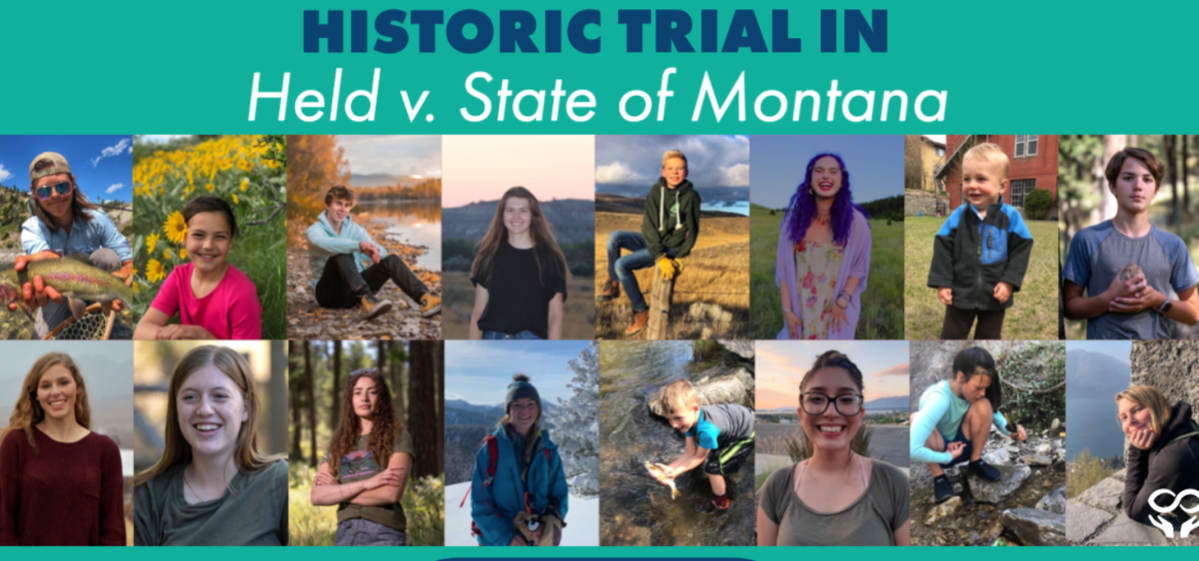
How often does a lawsuit with 16 plaintiffs  between the ages of 5 to 22 get noticed?  News outlets from CNN to the front page of The Washington Post signal the historic nature of a  trial centering on the climate crisis. The ruling prioritizes a child-first orientation and human rights obligation reflecting the Constitution of the State of Montana that “The state and each person shall maintain and improve a clean and healthful environment in Montana for present and future generations”. 

U.S. District Court Judge Kathy Seeley in her 103-page decision found that

“young Montana residents have experienced past and ongoing injuries resulting from the State’s failure to consider [greenhouse gas emissions] and climate change, including injuries to their physical and mental health, homes and property, recreational, spiritual, and aesthetic interests, tribal and cultural traditions, economic security, and happiness.”

If upheld by the Montana Supreme Court, it will reverse a recently passed state law that prohibits state agencies from considering the impact of global warming and pollution during the permit process for fossil fuel projects.

Eva, one of the plaintiffs, says

 “I’m so speechless right now. I’m really just excited and elated and thrilled. I cannot believe the ruling. I’m just so relieved. I feel so grateful to have worked with every single person who has been involved in this. Everybody from Our Children’s Trust is just amazing. They’re all so wonderful. And I have so much love and appreciation for the other youth plaintiffs because they’re just so fantastic and such wonderful people. And we together have done this amazing thing and it’s just so wonderful.”

The camaraderie evident between the attorneys and other young plaintiffs also  is happening now in Hawaii, Utah, Virginia and other states. This rare courtroom collaboration is captured in the superb Youth v. Gov documentary about the pending Federal youth-led lawsuit. Check out of our blog from a year ago that highlights two candid moments in the film which showcase genuine intergenerational interdependence. These clips will make your heart sing!

Learn more: 

Unlock Knowledge of Those Impacted by the Juvenile Justice System

What happens when authoritative energy is replaced by authentic intergenerational symbiosis.

“The real crime lies in how society views us.” 

This indictment by a young individual cited in a report by the Shelby County Youth Council in Memphis stings because it is true. 

Activists of all ages in Shelby County have no illusions about dislodging deep systemic racism but they demonstrate increasing impatience about how minors are mistreated in the largest county in Tennessee. 

Salina Shamsuddin with the Youth Justice Action Council did not mince words with me when talking about how grownups need to behave.

 It’s oppressive to call us children and kids because it has a negative connotation that is not empowering to us so we’d like to be referred to as youth … Catching them [adults] and standing up for ourselves is one of the biggest things that work and people really understand they cannot treat us like this anymore.  

The Youth Justice Action Council (YJAC) centers its work on those impacted by the juvenile justice system in Memphis. At age 14 Crystal Oceja, whose “brother didn’t get treated with humanity,” helped develop 10 legal demands in its “Break the Chains” written petition and rap version. YJAC used these specific demands in its campaign to defeat the District Attorney and Juvenile Court Judge who tried many Black and Brown youth as adults.   

Following this victory, the Youth Justice Action Council hosted a forum for the newly elected Judge,  DA and law enforcement.  In small groups, two YJAC members shared their firsthand stories about the juvenile justice system and one of the other Council members facilitated. Adults were told not to interrupt or interrogate.  Another one of the facilitators, Milana Kuma emphasized

… the need to center on the experiences of systems impacted youth as opposed to just recommendations. It’s harder to invalidate when they [DA and others] are faced with the trauma they have caused and cannot distance themselves.

Marshawn Jenison, 16, summed up: “I feel good about actually being heard. Nothing negative back. They are trying to understand how we really feel and what is really going on.” 

One Youth Justice Action Council representative serves on the five-member Shelby  Countywide Juvenile Justice Consortium, all appointed by the Mayor. This is not a token position. In fact, this rep and the YJAC have credibility and clout plus strong rapport with the adult members.

I don’t think we’ve ever made a decision that has not had a youth voice…They are our checks and balances. We are really led by them.

Rebecca Davis, Chair of Countywide Juvenile Justice Consortium

The Youth Justice Action Council is sponsored by Stand for Children Tennessee, which advocates for racial justice and improving public education. A 100-year-old organization in Memphis, appropriately named Bridges USA, lives and breathes by its deep commitment to youth-adult equity. Crystal, now 16, captures this rare intergenerational symbiosis. 

The adults approach you with no authoritative energy. They are very open. They are cool. They check in. They don’t force you to do anything.

There’s a bit of disbelief that systemic change can actually happen. Even with the horrific murder by police of Tyre Nichols, the recent election fuels the determination of these young advocates erase the superpredator view that Mike Males debunks in The Terrifying Plunge of Youth Crime published at YouthFacts.org.

Recap:

Bridges USA

Countywide Juvenile Justice Commission

Shelby County Youth Council Youth Voice Report

Stand for Children Tennessee 

YouthFacts.org

Youth Justice Action Council

Photo Credit: ABC24