
The Generation That Refuses to Wait

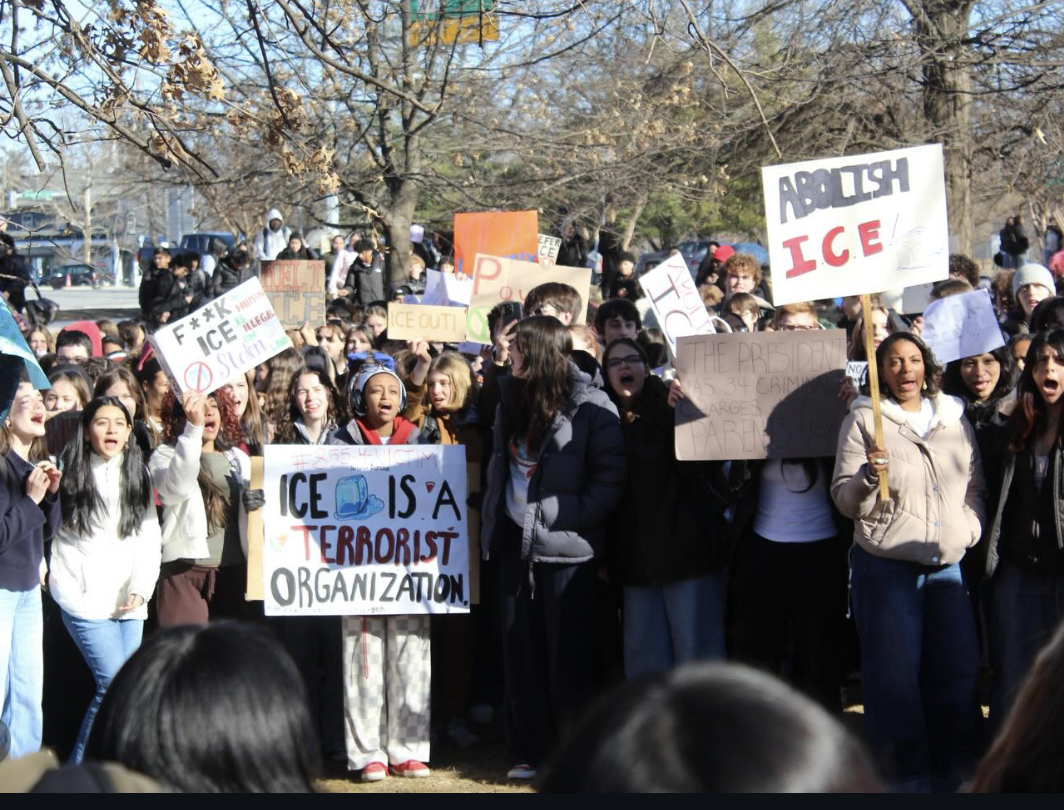
Across small towns and major cities, demonstrations against the Trump regime are growing in both size and intensity. But one development stands out: the surge of young people filling the streets.

“We are doing this to show a shared interest, a shared passion for keeping ICE out of our schools and our community.” —  High school senior Elise B.

This wave of Gen Z activism may be what finally pushes the nation toward the “Chenoweth rule”—the theory that sustained, nonviolent protest by just 3.5 percent of the population can trigger transformative change. History suggests that when young people move in large numbers, societies shift.

An uplifting post by Mark Provost captures this moment clearly:

The broadening generational participation against Trump is arguably more important than the widening geography of resistance.

Once again, young people have become the essential engine of a national movement. As Provost describes:

Today’s youth are the most diverse generation in American history. Attacks on immigrants and the normalization of cruelty cut deeply across racial and cultural lines. This blend of empathy and anger is only intensifying.

To witness spontaneous and organic protests by young people aged 14 to 22 rising up is to behold collective joy. I’ve reviewed thousands of images and videos. You don’t see a single student scrolling their phone. They are exuberant. They are alive. They are linking arms, hugging each other, and supporting each other. These kids are forming their identities and have made the decision to become active subjects in the American story. They appear determined to turn a new chapter.

Provost’s reflection shows how widespread this movement has become:

I saw kids in Burlington under a darkening cloudy skin wearing flannels and hoodies, and knew it wasn’t Burlington, Vermont, where’s it’s below freezing and at least 1,000 people marched. It was the mountainous town of Burlington, Washington. Portland, Oregon saw a big turnout; Portland’s Maine’s was even larger as a share of total residents. Students walked out at Brooklyn Tech, the largest high school in the nation.

These are not isolated protests in predictable places. They are emerging everywhere—urban and rural, coastal and inland. Moreover, there are serious risks to protesters, especially in certain states. Texas Gov. Abbott’s has threatened to curtail students’ First Amendment rights. He issued this statement: “Schools and staff who allow this behavior should be treated as co-conspirators and should not be immune to criminal behavior.” What a reminder of the landmark Tinker v. Des Moines Independent Community School District that ruled “It can hardly be argued that either students or teachers shed their constitutional rights to freedom of speech or expression at the schoolhouse gate.”

Political researcher John Della Volpe explains in his book Fight! How Generation Z Is Channeling Its Fear and Passion to Save America:

If there is a difference between millennials and the next generation, it is this: zoomers are not waiting on anything or anyone; they are going to force the issue. They will make the change by themselves–if necessary.

This generation has grown up amid gun violence, climate disasters, pandemics, and relentless political turmoil. Waiting for institutions to reform themselves—without genuine youth inclusion—has never seemed realistic. As their momentum contributes to the 3.5 percent threshold that history suggests can drive real change, they are shattering negative stereotypes about their generation and forcing older Americans to confront—and respect—their catalytic power.

Now is the time for adults to act as allies and accomplices to support the courageous students across the country.


Election Lessons for Every Organization

– Wendy Schaetzel Lesko

Profound lessons emerge from Zohran Mamdani’s victory even though NYC is unlike any other city. A historic turnout and a whopping 78 percent of those under age 30 voted for Zohran Mamdani. Sure, he is young, energetic, and charismatic, but I believe there is a broader conclusion that is relevant to any organization that recognizes the irreplaceable value of the rising generations. 

“The language with which we speak to young people is truly one of condescension… If you treat young people with the respect that they deserve then they will not be a part of your movement but the heart of your movement.”

Mamdani’s insight isn’t just about politics—it’s a wake-up call to every institution, nonprofit, and company that seeks to stay relevant and innovate. His words expose a persistent gap between how adults talk about young people and how rarely they talk with them. This “Youthquake” (Oxford Dictionaries’ Word of the Year in 2017), that powered his campaign did not happen by accident; it came from genuine listening, shared power, and the conviction that young people deserve to shape—not just support—the causes they believe in.

Cities have always been laboratories for democracy. In my recent article in the National Civic League’s magazine, I outline specific strategies for local government leaders to replace token youth engagement efforts. Read full article here. These lessons are magnified by Mamdani’s example. His victory demonstrates what becomes possible when young people are seen not as a “target audience” but as co-architects of civic renewal.

The election sharpens some of these approaches:

  • Demonstrate that young people are not too young to be critical thinkers
  • Amend the expression “meet them where they are” and instead meet their grievances and dreams head on
  • Make sure ideas emanating from “youth voice” does not continue to fall on deaf ears
  • Be relentless in learning from those young people who most impacted and unheard
  • Recognize the demand for urgency is not the negative stereotype of impatience that often sidelines young people
  • Replace empty rhetoric and broken promises with persistent and accountable action
  • Embrace “We are unstoppable, another world is possible!” 

Before the November 4 election, pollster John Della Volpe validated that people feel most campaign messages sound like scripts from a Human Resources department. Young people detect condescension in a heart beat. Yet the responses from these young NYC voters offer a poignant counterpoint and a hopeful challenge: h

“We’re hopeful — and just ready for some new love and spaces.”
“We still care. We’re just not represented.”
“We’ve been through a lot. But we’re still trying to be part of it.”
“We are the generation that will be talked about for generations.”

These are not the words of apathy or disengagement. They are an invitation—a plea—to rebuild trust through authenticity, shared purpose, and visible collaboration. Whether the context is an election, a nonprofit boardroom, a classroom, or a city hall, the message is the same: young people are paying attention. They are measuring not our slogans but our sincerity, not our outreach but our willingness to share real power.

Mamdani’s landslide is more than a political milestone; it’s a generational mirror. It reflects what happens when young people are not merely courted during campaign season but centered in year-round decision-making. Every organization, regardless of mission or size, can draw from this moment a simple yet profound truth: when young people feel truly seen, heard, and valued, they don’t just show up—they show the way forward.

Photo credit https://www.thecivicscenter.org