
by Wendy Lesko
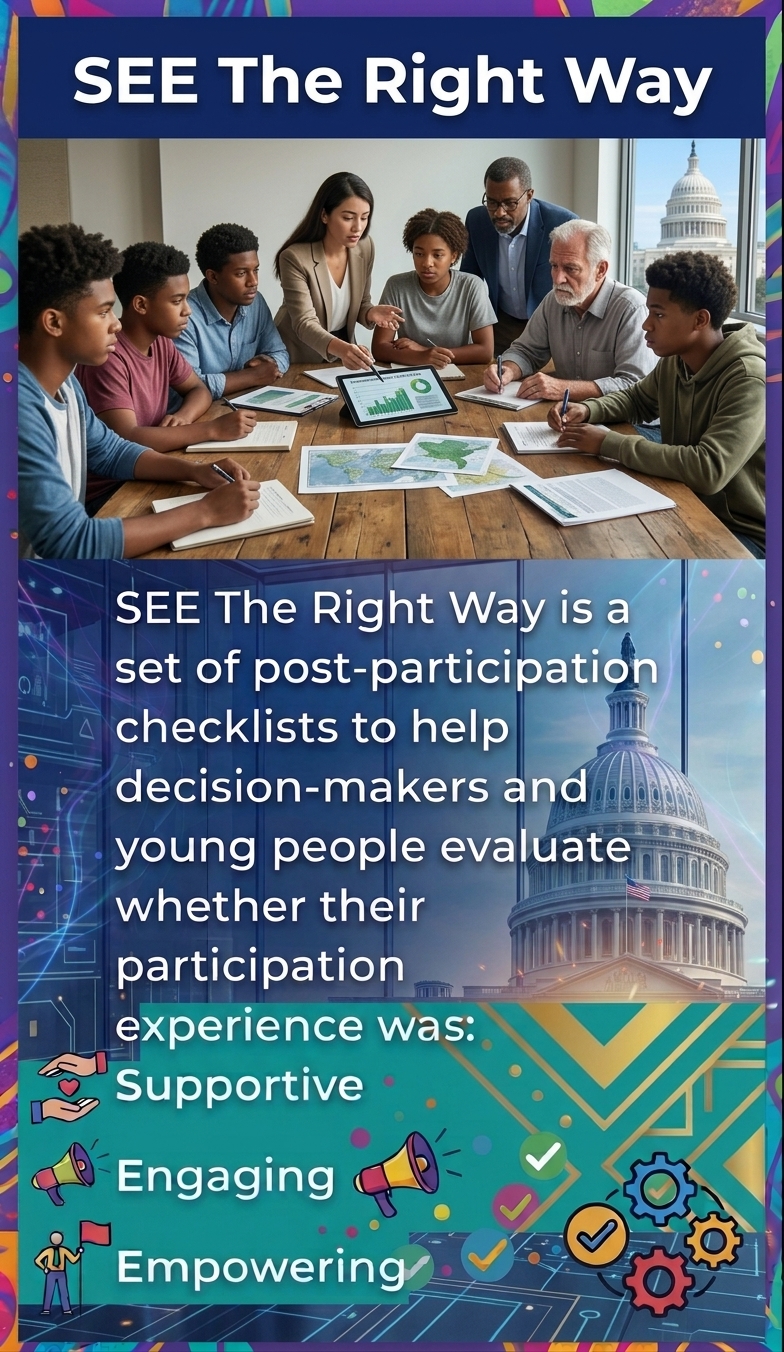
Initiatives to give young people “a seat at the table” may backfire. One reason is obvious: most meetings are downright tedious and often unproductive. These experiences can drive away much younger minds whose insights are sorely needed by community leaders and policymakers. I could write a book—actually I have—on effective intergenerational strategizing between professionals and the non-expert experts. What follows are a handful of promising guidelines for adults on how to avoid potentially harmful experiences of “meaningless meetings.”
Countless times I have cautioned an aspiring young changemaker that a particular opportunity, such as attending a coalition meeting, might not be worth their time. This advice stands in contrast to many adults who think about their time and assume that just about any type of civic participation will be useful “youth development.”
“Meaningless meetings” is the plain-spoken critique that reflects many of my conversations with young people who serve in all types of capacities with nonprofit organizations and government agencies.
This formal complaint about “meaningless meetings” comes from the Scottish Youth Parliament. This well-established institution, with its 166 democratically elected representatives between the ages of 14–25, develops a manifesto that serves as the policy agenda for five years so advocacy with members of the Scottish Parliament is not a fleeting platform but ongoing with the potential to gain real momentum.
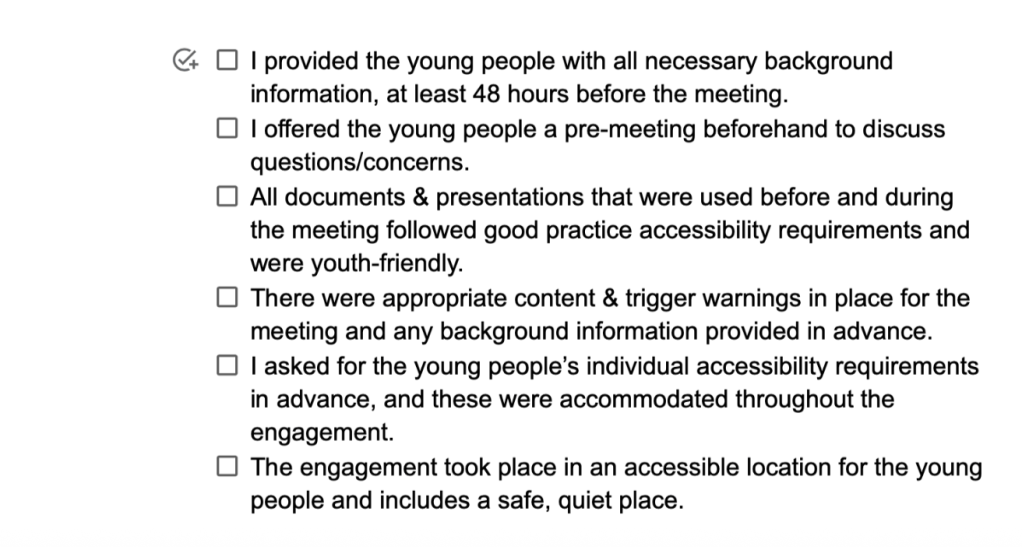
Even though these young parliamentarians can boast about their influence (such as a successful campaign that grants nationwide free bus travel to all residents aged 5 up to their 22nd birthday), they call out “meaningless meetings.” In response to this common frustration, the Scottish Youth Parliament has generated some stellar resources designed for adults. Their training and worksheets go beyond coaching adults to identify their ingrained biases and other adultist behaviors by providing checklists on how adults can grade themselves in their intergenerational interactions.
Here is one sample:
HELP! TRANSLATORS NEEDED
Jargon is a major divider. Acronyms too. Here is an excerpt by co-author Denise Webb from my latest book, Why Aren’t We Doing This! Collaborating with Minors in Major Ways (pages 72-74):
Imagine you’re in a foreign country for the first time. This country is known for welcoming foreigners, learning about different cultures, being open to unconventional views, and seeking ways to make their own country more livable. When you step foot into the country, you’re greeted by people who are translators. They tell you to be yourself and interact with the people to the best of your ability… You nod and look up to notice the scenery. People passing by start talking to you, and you look around but the translators are gone! You are in the midst of 10 curious locals asking you:
“Hey, puur you pu rmamp tonight?
“Is there Yampir aprum your town?”
How do you Kiyaaum giyab with umap ansi your school?
Remember, this is how it feels when jargon is not your native language.
DEMONSTRATE PARTICIPATION WAS NOT MEANINGLESS
Feedback loops to keep young advocates informed are an accepted practice, but this accountability checklist by the Scottish Youth Parliament helps adults go a step further in evaluating their collaboration with young people. Notice the language “Fast, Full, Youth-Friendly and Followed-up.”
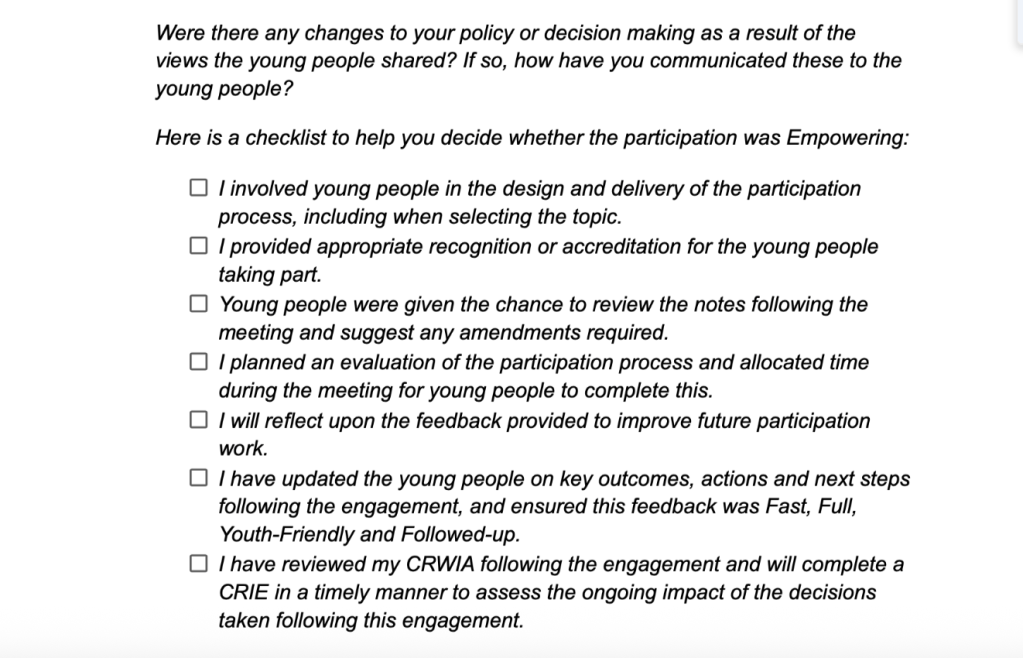
(Note: CRWIA stands for Child Rights and Wellbeing Impact Assessment. It is a policy-making process required by law since Scotland’s implementation of the United Nations Convention on the Rights of the Child in 2024. The United States is the only country in the world not to ratify this treaty.)
ONE MORE RECOMMENDATION:
WATCH YOUR LANGUAGE
Throw out the demeaning rhetoric! Calling young people “kids” (which means baby goats) and prefixing youth-led campaigns or projects with “mini” or “little” makes them feel less than.
Respecting young advocates requires shifting our language, our structures, and our intentions. When adults dismantle tokenism, eliminate impenetrable jargon, and hold themselves accountable to meaningful follow-through, youth participation ceases to be a performative exercise. By taking practical cues from organizations like the Scottish Youth Parliament, leaders can ensure that young people are not merely invited to sit at the table, but are given the space, respect,and influence.
LINKS:
Check out the entire series of The Right Way for meaningful participation by the Scottish Youth Parliament https://www.therightway.scot/
United Nations Convention on the Rights of the Child adopted in 1989
https://www.ohchr.org/en/instruments-mechanisms/instruments/convention-rights-child
Child-Friendly version of UNCRC https://www.unicef.org/child-rights-convention
Why Aren’t We Doing This! Collaborating with Minors in Major Ways by 19-year-old Denise Webb and Wendy Lesko https://youthinfusion.org/why-arent-we-doing-this

