
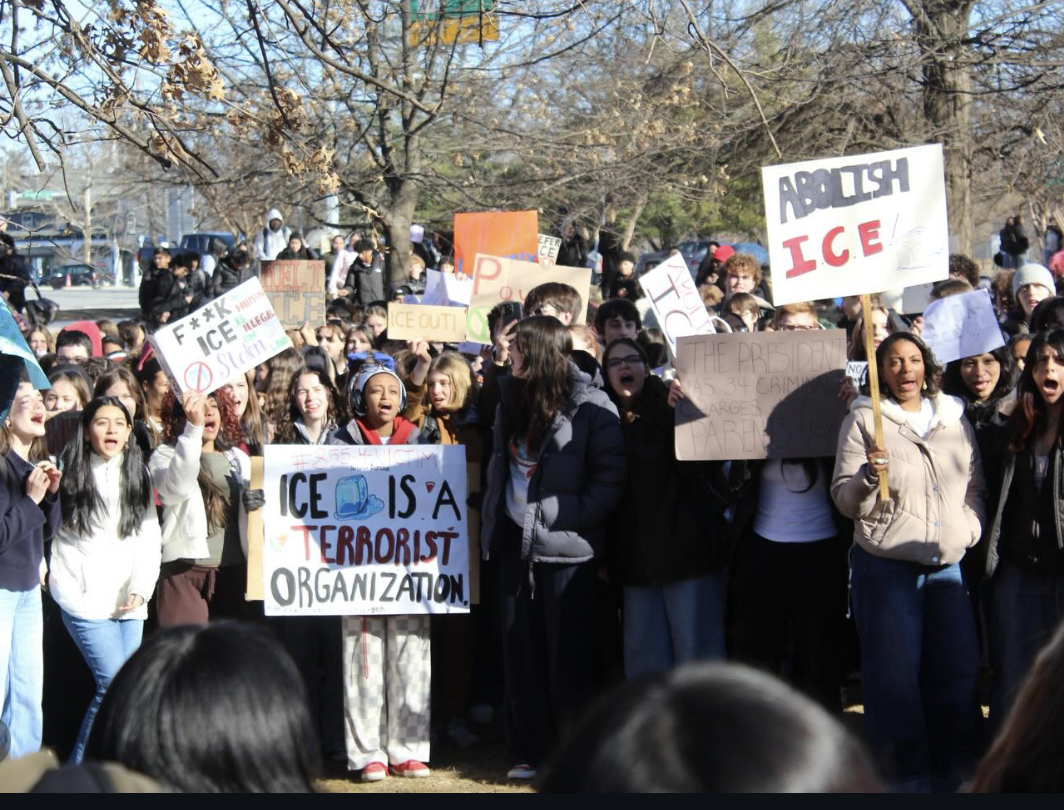
Across small towns and major cities, demonstrations against the Trump regime are growing in both size and intensity. But one development stands out: the surge of young people filling the streets.
“We are doing this to show a shared interest, a shared passion for keeping ICE out of our schools and our community.” — High school senior Elise B.
This wave of Gen Z activism may be what finally pushes the nation toward the “Chenoweth rule”—the theory that sustained, nonviolent protest by just 3.5 percent of the population can trigger transformative change. History suggests that when young people move in large numbers, societies shift.
An uplifting post by Mark Provost captures this moment clearly:
The broadening generational participation against Trump is arguably more important than the widening geography of resistance.
Once again, young people have become the essential engine of a national movement. As Provost describes:
Today’s youth are the most diverse generation in American history. Attacks on immigrants and the normalization of cruelty cut deeply across racial and cultural lines. This blend of empathy and anger is only intensifying.
To witness spontaneous and organic protests by young people aged 14 to 22 rising up is to behold collective joy. I’ve reviewed thousands of images and videos. You don’t see a single student scrolling their phone. They are exuberant. They are alive. They are linking arms, hugging each other, and supporting each other. These kids are forming their identities and have made the decision to become active subjects in the American story. They appear determined to turn a new chapter.
Provost’s reflection shows how widespread this movement has become:
I saw kids in Burlington under a darkening cloudy skin wearing flannels and hoodies, and knew it wasn’t Burlington, Vermont, where’s it’s below freezing and at least 1,000 people marched. It was the mountainous town of Burlington, Washington. Portland, Oregon saw a big turnout; Portland’s Maine’s was even larger as a share of total residents. Students walked out at Brooklyn Tech, the largest high school in the nation.
These are not isolated protests in predictable places. They are emerging everywhere—urban and rural, coastal and inland. Moreover, there are serious risks to protesters, especially in certain states. Texas Gov. Abbott’s has threatened to curtail students’ First Amendment rights. He issued this statement: “Schools and staff who allow this behavior should be treated as co-conspirators and should not be immune to criminal behavior.” What a reminder of the landmark Tinker v. Des Moines Independent Community School District that ruled “It can hardly be argued that either students or teachers shed their constitutional rights to freedom of speech or expression at the schoolhouse gate.”
Political researcher John Della Volpe explains in his book Fight! How Generation Z Is Channeling Its Fear and Passion to Save America:
If there is a difference between millennials and the next generation, it is this: zoomers are not waiting on anything or anyone; they are going to force the issue. They will make the change by themselves–if necessary.
This generation has grown up amid gun violence, climate disasters, pandemics, and relentless political turmoil. Waiting for institutions to reform themselves—without genuine youth inclusion—has never seemed realistic. As their momentum contributes to the 3.5 percent threshold that history suggests can drive real change, they are shattering negative stereotypes about their generation and forcing older Americans to confront—and respect—their catalytic power.
Now is the time for adults to act as allies and accomplices to support the courageous students across the country.
 Youth Infusion